
Fraud is evolving at a pace that challenges even the most sophisticated financial institutions, ecommerce platforms, and insurance providers. Cybercriminals exploit automation, social engineering, and global connectivity to launch increasingly complex schemes. In response, organizations are turning to machine learning (ML) to detect anomalies, uncover hidden patterns, and stop fraud before it causes significant damage. The right machine learning models, properly trained and deployed, can improve fraud detection rates by as much as 35% while reducing false positives that frustrate legitimate customers.
TLDR: Machine learning dramatically strengthens fraud detection by identifying complex, hidden patterns in transaction data. Models such as logistic regression, random forests, gradient boosting, neural networks, and graph-based methods each contribute distinct advantages. When combined strategically, these models can increase detection rates by up to 35% while lowering false positives. The key lies in selecting the right models and continuously retraining them to adapt to evolving fraud tactics.
Below are seven powerful machine learning models that are transforming fraud detection systems across industries.
1. Logistic Regression: The Reliable Baseline
Logistic regression is often the starting point for fraud detection projects. While it is one of the oldest statistical learning methods, its simplicity and interpretability make it extremely valuable.
- Easy to interpret: Analysts can understand which factors increase fraud likelihood.
- Fast to train: Suitable for large-scale transaction data.
- Acts as a strong benchmark: More complex models are often evaluated against it.
For example, features such as transaction amount, location mismatch, purchase frequency, or device type can be weighted to estimate fraud probability. While logistic regression may not capture deep nonlinear relationships, it remains a critical building block in layered fraud detection architectures.
2. Decision Trees: Clear and Actionable Rules
Decision trees model fraud detection as a series of rule-based splits. Each branch asks a yes-or-no question, such as “Is the transaction amount greater than $1,000?” or “Is the IP address from a high-risk country?”
The advantage lies in their transparency. Risk analysts can visualize exactly how a decision was reached. This is especially useful in regulated industries like banking and insurance where explanation is mandatory.
Key benefits include:
- Handles both numerical and categorical data
- Easy to interpret and audit
- Identifies interaction effects between variables
However, single trees can overfit. That’s where ensemble methods enter the picture.
3. Random Forest: Strength in Numbers
Random forest improves on decision trees by building hundreds—or even thousands—of trees and aggregating their predictions. Each tree is trained on a random subset of data and features, which increases robustness and reduces overfitting.

In fraud detection, this approach yields substantial gains because:
- Fraud patterns are rarely linear or simple
- Different subsets of features may uncover different fraud behaviors
- Ensemble averaging reduces bias and variance
Financial institutions often report up to a 20–30% improvement in fraud detection accuracy after shifting from single-model approaches to ensemble systems like random forests.
4. Gradient Boosting Machines: Precision Targeting
If random forests represent wisdom of the crowd, gradient boosting machines (GBMs) represent precision strategy. Rather than building trees independently, boosting builds them sequentially. Each new tree corrects the errors of the previous ones.
Popular implementations such as XGBoost, LightGBM, and CatBoost are widely used in competitive fraud detection systems. Their advantages include:
- Exceptional predictive accuracy
- Strong handling of imbalanced datasets
- Customizable loss functions for fraud prioritization
Fraud detection datasets are highly imbalanced—fraudulent transactions may account for less than 1% of all activity. GBMs excel in this environment, identifying subtle signals that weaker models might overlook.
Organizations leveraging gradient boosting often achieve the full 35% improvement benchmark when compared to rule-only systems.
5. Neural Networks: Deep Pattern Recognition
As fraud schemes grow more sophisticated, deep learning models offer powerful pattern recognition capabilities. Neural networks can process massive datasets and uncover intricate nonlinear relationships across hundreds of variables.
Applications include:
- Credit card fraud detection
- Insurance claim inspection
- Account takeover monitoring
Multi-layer neural networks analyze transaction sequences, geographic activity, and device fingerprints simultaneously. They are especially effective when paired with behavioral data such as typing speed or navigation patterns.

Although neural networks require significant computational resources and careful tuning, their ability to model high-dimensional data makes them indispensable for large enterprises handling millions of transactions daily.
6. Support Vector Machines (SVM): Boundary Optimization
Support Vector Machines are powerful classifiers that find the optimal boundary separating fraudulent and legitimate transactions. They are particularly effective in high-dimensional feature spaces.
In fraud detection, SVMs shine when:
- The dataset is complex but moderately sized
- Data is not linearly separable
- A clear decision margin is required
Through the use of kernel functions, SVMs can map transactions into higher-dimensional space where fraud becomes more distinguishable. While not as scalable as gradient boosting for extremely large datasets, SVMs remain a valuable option in specialized detection systems.
7. Graph-Based Models: Unmasking Fraud Rings
Individual transaction analysis tells only part of the story. Modern fraud often occurs in networks: coordinated rings, mule accounts, synthetic identities, and shared device clusters.
Graph-based machine learning models analyze relationships between entities—users, devices, IP addresses, and accounts—to detect suspicious patterns.
- Identifies shared devices across multiple accounts
- Detects unusual transaction chains
- Uncovers organized fraud rings
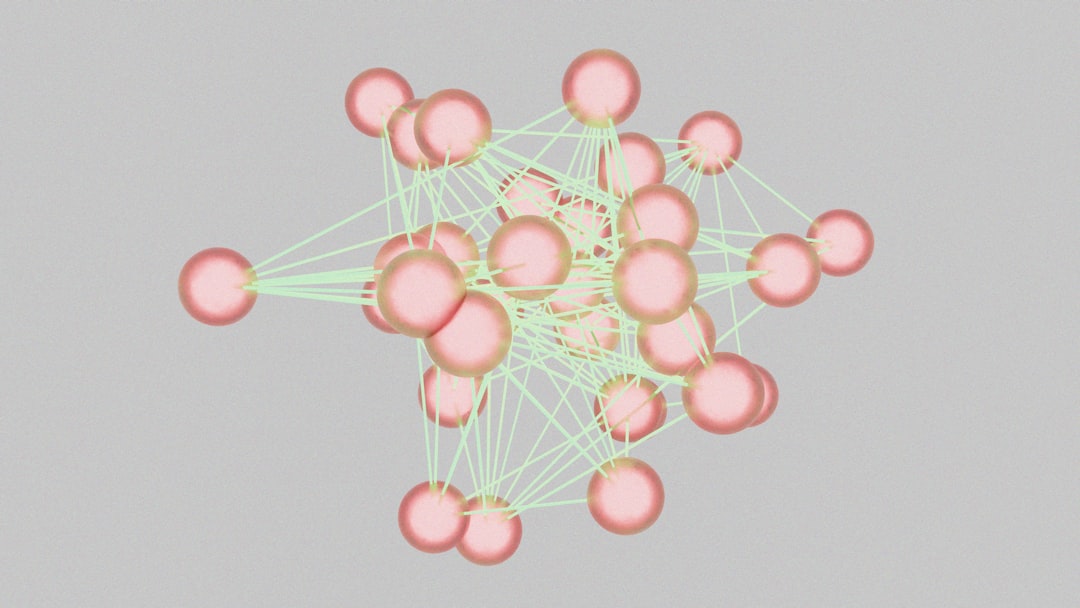
Graph neural networks (GNNs) and link analysis techniques have significantly improved fraud discovery rates, especially in telecom and fintech sectors. Instead of evaluating transactions in isolation, graph models expose coordinated behaviors that linear models cannot see.
Why Combining Models Delivers the Biggest Gains
No single model is perfect. The strongest fraud detection systems combine multiple approaches using layered or hybrid architectures. For example:
- A logistic regression model may serve as an initial risk filter.
- A gradient boosting model refines mid-risk transactions.
- A neural network analyzes behavioral patterns.
- A graph model investigates network-level anomalies.
This multi-model strategy significantly reduces both false negatives (missed fraud) and false positives (incorrectly flagged legitimate users). Studies show that hybrid ML systems outperform rule-based frameworks by up to 35% in overall detection efficiency.
Key Factors That Maximize Model Performance
Even the best algorithms fail without proper implementation. To maximize results, organizations should focus on:
- High-quality feature engineering: Extract meaningful behavioral and contextual variables.
- Handling class imbalance: Use techniques like oversampling or cost-sensitive learning.
- Continuous retraining: Fraud patterns evolve rapidly.
- Explainability tools: Ensure compliance with regulatory frameworks.
Additionally, real-time fraud detection requires low-latency model deployment. Systems must score transactions in milliseconds without degrading customer experience.
The Future of Fraud Detection
The next frontier involves integrating machine learning with real-time behavioral biometrics, federated learning, and AI-powered decision orchestration. Fraudsters are increasingly using AI themselves, making adaptive learning systems essential.
Advanced techniques such as reinforcement learning may soon enable fraud systems to dynamically adjust risk thresholds based on evolving threat levels. Meanwhile, privacy-preserving technologies will allow institutions to collaborate on fraud intelligence without exposing sensitive data.
The battle between fraudsters and detection systems is ongoing—but machine learning has tilted the balance significantly. By implementing the seven models outlined above and combining them strategically, organizations can protect revenue, enhance trust, and reduce operational costs.
In today’s digital economy, fraud is not a matter of if, but when. Machine learning ensures that when fraud strikes, businesses are equipped not just to react—but to predict, prevent, and outperform criminal innovation.