
AtmosAI is best understood as an AI-driven intelligence layer designed to help organizations interpret complex environmental, operational, and business data. Rather than functioning as a single-purpose tool, it can be positioned as a platform that combines data ingestion, analytics, predictive modeling, automation, and decision support. For decision-makers, the value of AtmosAI lies in its ability to turn fragmented data streams into timely, usable insights that support faster and more confident action.
TLDR: AtmosAI helps organizations collect, analyze, and act on large volumes of complex data through artificial intelligence and automation. Its core strengths include prediction, anomaly detection, workflow optimization, and integration with enterprise systems. It can be applied across industries such as energy, logistics, agriculture, insurance, manufacturing, and smart infrastructure. Successful adoption depends on data quality, responsible governance, and clear business objectives.
What AtmosAI Is Designed to Do
At its core, AtmosAI is intended to support data-informed decision-making. Many organizations already collect data from sensors, enterprise software, weather services, operational systems, mobile devices, and third-party databases. The challenge is that this data often exists in disconnected systems, arrives in different formats, and changes too quickly for manual analysis to be effective.
AtmosAI addresses this challenge by creating a structured environment where data can be collected, normalized, analyzed, and converted into recommendations or automated actions. In practical terms, it may help teams answer questions such as: What is likely to happen next? Where are risks emerging? Which assets require attention? How should resources be allocated? What action will reduce cost, delay, waste, or exposure?
This makes AtmosAI especially relevant in sectors where conditions change rapidly and decisions are affected by multiple variables. A logistics company, for example, may need to account for weather, fuel pricing, vehicle availability, route congestion, labor constraints, and customer deadlines. An AI system that can process these signals together may provide a more complete view than traditional dashboards.
Core Capabilities of AtmosAI
The exact capabilities of any AtmosAI deployment will depend on the configuration, data sources, and business use case. However, most serious implementations are built around several foundational functions.
- Data ingestion and normalization: AtmosAI can connect to multiple data sources and convert incoming information into a usable format. This may include structured data, sensor readings, geospatial data, time-series signals, and operational logs.
- Predictive analytics: By identifying patterns in historical and real-time data, AtmosAI can forecast likely future outcomes, such as demand shifts, equipment failures, supply disruptions, or environmental changes.
- Anomaly detection: The platform can identify unusual behavior that may indicate a malfunction, security issue, compliance risk, or emerging operational problem.
- Recommendation engines: AtmosAI can provide suggested actions based on defined goals, constraints, and risk thresholds. These recommendations may support human review or trigger automated workflows.
- Scenario modeling: Users can test different assumptions and compare possible outcomes before committing resources or changing strategy.
- Automation and alerts: When specific conditions are met, AtmosAI can notify stakeholders, escalate incidents, create tickets, or initiate predefined business processes.
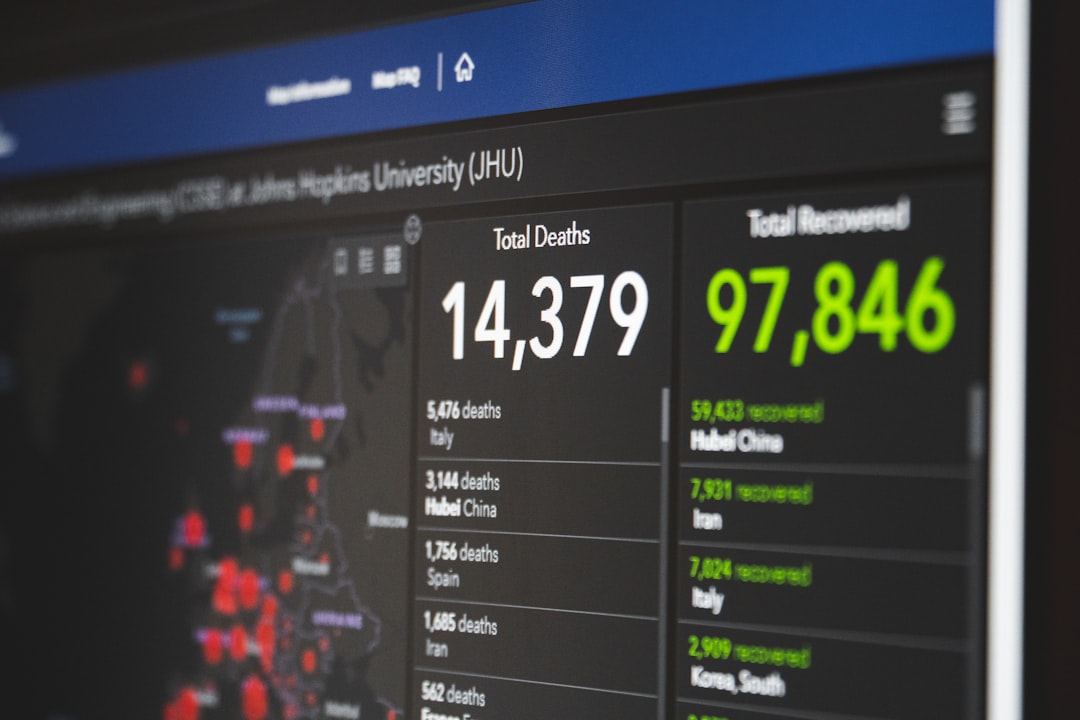
A trustworthy AtmosAI implementation should not be viewed as a replacement for professional judgment. Instead, it should be treated as a decision-support system that improves visibility, reduces manual analysis, and helps experts focus on higher-value decisions. The strongest results usually occur when AI outputs are paired with domain expertise, oversight, and clear accountability.
Integrations and Data Connectivity
One of the most important factors in the success of AtmosAI is its ability to integrate with existing technology environments. Most enterprises cannot afford to replace core systems simply to gain AI capabilities. Therefore, effective integration is critical.
AtmosAI may connect with common categories of business and technical systems, including:
- Enterprise resource planning systems: Integration with ERP platforms can help align forecasts and recommendations with finance, procurement, inventory, and production data.
- Customer relationship management systems: CRM connectivity can support demand forecasting, service prioritization, customer risk scoring, and account-level insights.
- Internet of Things devices: IoT sensors can provide real-time information from buildings, vehicles, machines, farms, energy assets, or field infrastructure.
- Cloud data platforms: AtmosAI can work with modern data warehouses, data lakes, and cloud storage environments to access large-scale historical and operational datasets.
- Geospatial and weather services: For industries affected by climate, location, or atmospheric conditions, these integrations can improve planning and risk management.
- Workflow and ticketing tools: Connecting to operational platforms allows insights to become actions, such as maintenance requests, compliance checks, or incident escalations.
Strong integrations also require careful attention to data governance. Organizations should define who owns each data source, how data is validated, how access is controlled, and how long information is retained. Without this discipline, even advanced AI systems can produce unreliable outputs.
Industry Applications
AtmosAI can provide value in several industries where complexity, uncertainty, and time-sensitive decisions are common. Its usefulness is not limited to one vertical; instead, it depends on whether the organization has meaningful data and a clear operational problem to solve.
Energy and Utilities
In energy and utilities, AtmosAI can support grid planning, demand forecasting, renewable generation forecasting, outage prediction, and asset maintenance. As power systems become more distributed and weather-dependent, operators need accurate insight into changing supply and demand conditions. AI-assisted forecasting can help improve resilience and reduce unnecessary operational costs.
Logistics and Transportation
For logistics providers, AtmosAI can analyze route conditions, delivery constraints, vehicle performance, traffic patterns, and external risks. The platform may help optimize routes, predict delays, improve fleet utilization, and reduce fuel consumption. In transportation networks, even small improvements in timing and efficiency can produce significant financial gains.
Agriculture and Food Production
Agriculture is highly sensitive to weather, soil conditions, water availability, pest risks, and market demand. AtmosAI can assist with crop planning, irrigation scheduling, yield forecasting, and resource management. For food producers and distributors, the same intelligence can support cold chain monitoring, inventory planning, and waste reduction.
Insurance and Risk Management
Insurers can use AtmosAI to improve underwriting, claims forecasting, catastrophe modeling, and risk assessment. When environmental or operational factors increase the likelihood of losses, predictive models can help insurers respond earlier and price risk more accurately. However, responsible use is essential, particularly where automated analysis may affect customer treatment or eligibility.
Manufacturing and Industrial Operations
In manufacturing, AtmosAI may support predictive maintenance, quality control, production scheduling, and energy optimization. By detecting anomalies in machine behavior or environmental conditions, the platform can help reduce downtime and prevent costly failures. It can also assist managers in balancing production targets with resource constraints.
Smart Cities and Infrastructure
Cities and infrastructure operators can use AtmosAI to monitor traffic, public utilities, air quality, water systems, and emergency response conditions. When connected to real-time sensors and planning systems, AI can support faster detection of infrastructure stress and improve coordination between departments.
Image not found in postmeta
Benefits for Organizations
The business case for AtmosAI is strongest when it is linked to measurable outcomes. Common benefits include improved forecasting accuracy, lower operational costs, faster response times, better asset utilization, reduced risk, and improved service reliability. In regulated or safety-critical environments, the ability to document decisions and maintain audit trails can also be valuable.
Another important benefit is consistency. Human teams may interpret data differently depending on experience, workload, or available context. A well-designed AI system can apply the same analytical framework across large volumes of information, while still allowing human review for important decisions.
Implementation Considerations
Organizations should approach AtmosAI adoption with realistic expectations. AI projects succeed when they are focused, measurable, and supported by high-quality data. They struggle when goals are vague, data is incomplete, or stakeholders expect immediate transformation without operational change.
Before implementation, leaders should consider the following:
- Define the business problem: The project should begin with a specific use case, such as reducing downtime, improving forecasts, or accelerating incident response.
- Assess data readiness: Data must be accurate, accessible, timely, and relevant. Poor data quality will limit the reliability of any AI output.
- Establish governance: Teams should define ownership, access permissions, model validation processes, and escalation procedures.
- Plan for human oversight: Important decisions should include review, especially when they affect safety, compliance, finances, or customers.
- Measure performance: Success should be evaluated against clear metrics, such as cost savings, accuracy improvements, time reduction, or risk reduction.
Trust, Security, and Responsible Use
Because AtmosAI may interact with sensitive operational and business data, security and accountability are essential. Organizations should evaluate encryption, access controls, audit logging, data residency requirements, and vendor security practices. If models are used to make recommendations that affect people, fairness and explainability should also be considered.
Responsible use also means understanding limitations. AI systems can identify patterns, but they do not possess human judgment, ethical reasoning, or full contextual awareness. Their outputs should be interpreted as analytical support, not unquestionable truth. Clear documentation and regular model review help maintain confidence over time.
The Strategic Outlook
AtmosAI reflects a broader shift toward intelligent, connected operations. As organizations face more volatility in climate, markets, infrastructure, and supply chains, the ability to process complex data quickly is becoming a strategic advantage. Platforms like AtmosAI can help transform AI from an experimental capability into a practical component of daily decision-making.
For leaders considering AtmosAI, the best starting point is not the technology itself, but the decision process that needs improvement. When the use case is clear, the data foundation is sound, and governance is taken seriously, AtmosAI can become a reliable tool for forecasting, optimization, and operational resilience.